


Unlocking the Third Value Stream
For generations, the modern cotton gin has produced two recognized commodities. A third has always been present.

01 — OPPORTUNITY
Fiber. Cottonseed. And an untapped third stream.
Cotton fiber and cottonseed have established markets but the remaining byproduct stream has traditionally been treated as a handling obligation rather than a commercial resource.
The opportunity is not to change the gin inself. It is to recover more value from every ton already passing through it.
02 — OPERATIONAL EFFICIENCY
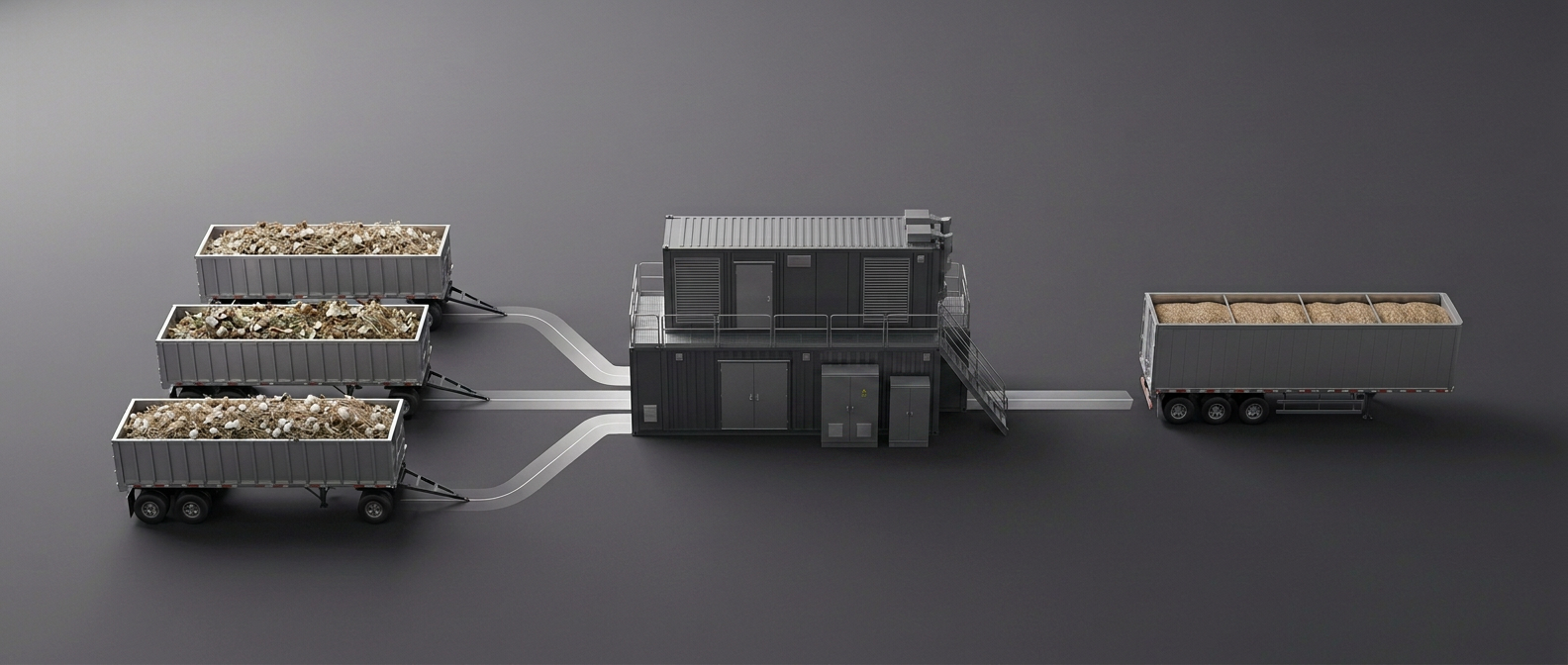
From three loads to one…
Loose cotton-gin byproduct occupies substantial trailer volume. Densification can consolidate multiple low-density loads into one commercially manageable outbound load.
Fewer truck movements. Less handling. Cleaner storage. Reduced risk.
Actual volume reduction and legal payload will be confirmed through measured operating data at the first installation.

03 — INTEGRATION
Designed to extend the gin—not replace it.
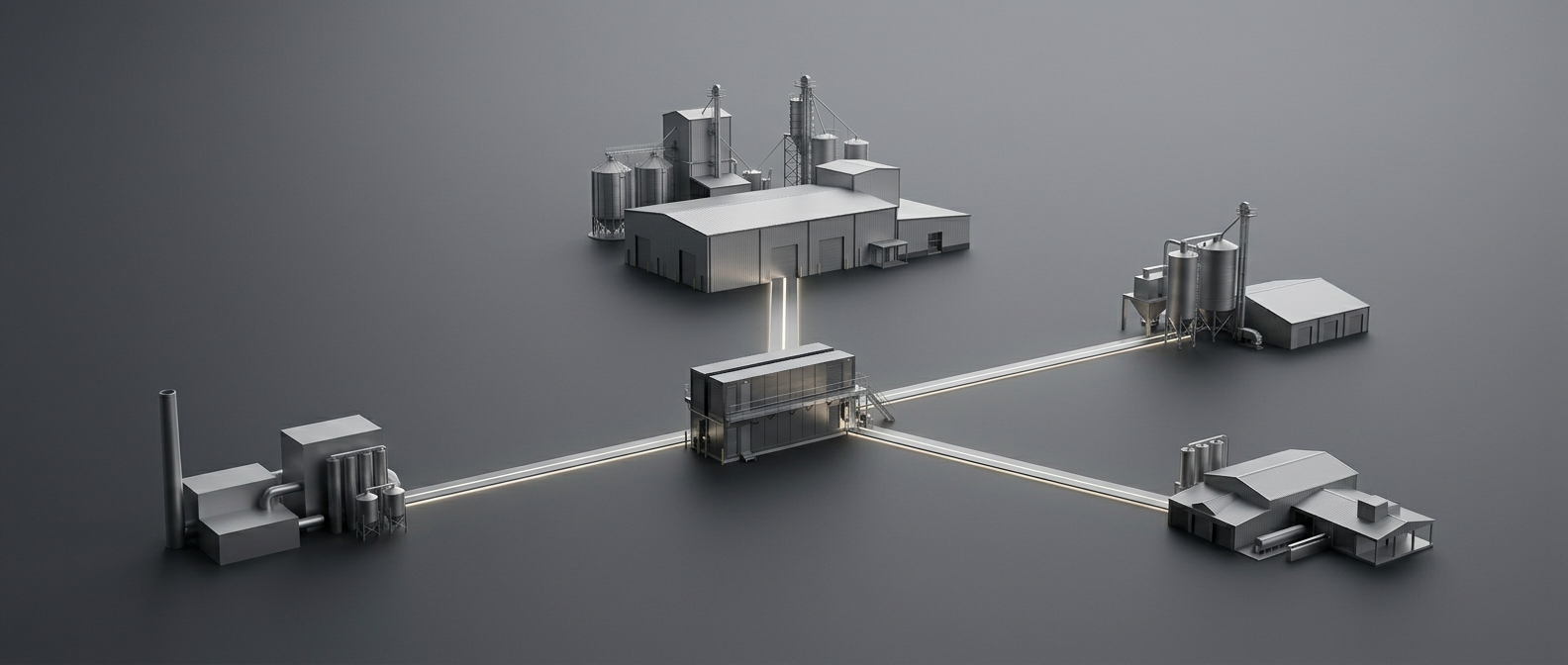
The modular platform is designed to integrate directly into existing material handling, utilities, and site operations.

04 — TRANSFORMATION
From variable byproduct to consistent commercial feedstock.
INCOMING MATERIAL
Variable, loose and difficult to transport
CONTROLLED PROCESSING
Cleaning, sizing, conditioning and densification
The objective is not simply to make pellets or briquettes. It is to create a repeatable specification that is denser, more uniform and easier to store, transport and qualify.
ENGINEERED OUTPUT
Consistent form, density and handling characteristics

05 — MARKET FLEXIBILITY
Designed for optionality.
A standardized agricultural feedstock can be qualified for multiple applications, allowing production to follow the highest-value viable outlet as markets evolve.

06 — COMMERCIAL VALIDATION
One site. Clear questions. Measurable answers.
1. CHARACTERIZE
Tonnage, moisture, density, composition and contaminants
2. PROCESS
Throughput, energy use, wear, labor and uptime
3. VALIDATE
Density, durability, storage behavior and laboratory specifications
4. COMMERCIALIZE
Buyer qualification, pricing and logistics
A proposed first installation at Bulloch Gin Co. in Brooklet, Georgia, should generate operating data—not assumptions.
5. REPLICATE
Standardize configuration, commissioning and service
07 — REPEATABLE DEPLOYMENT
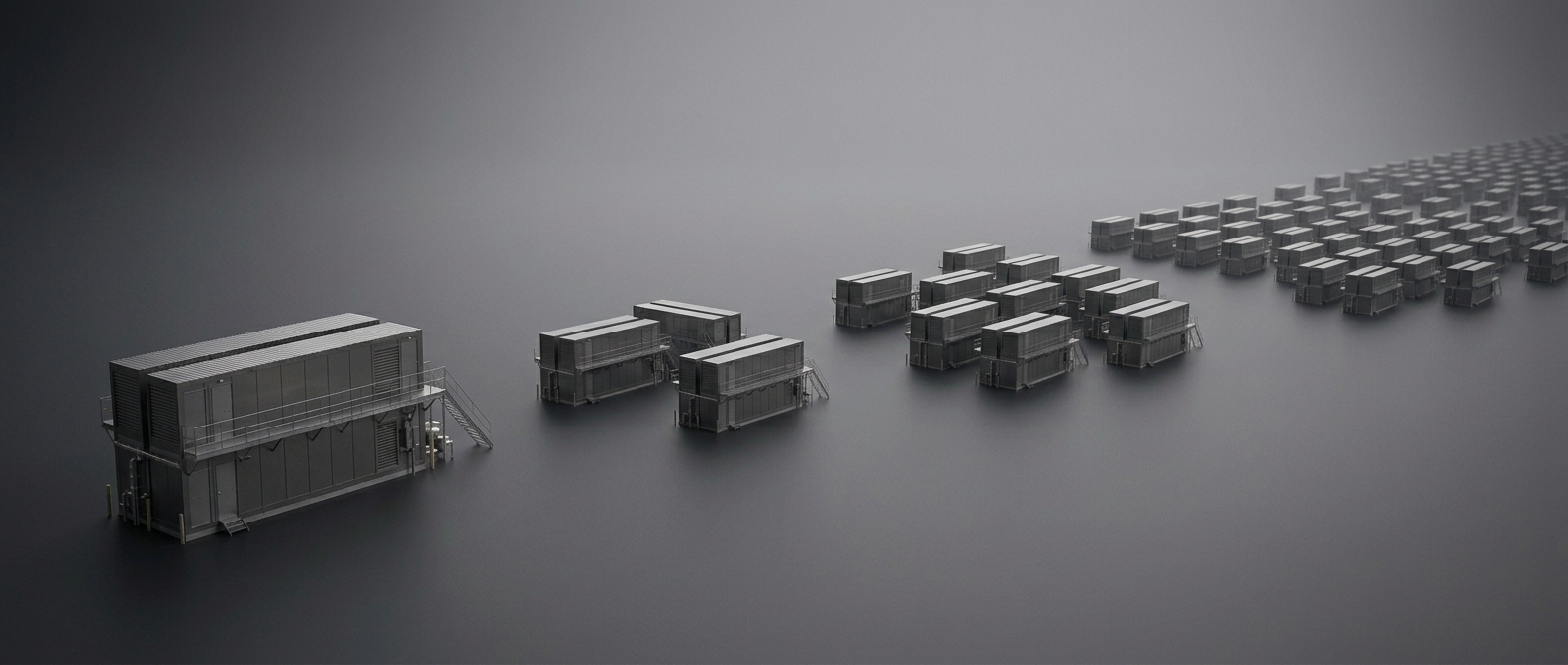
Validate once. Refine. Repeat.
The first installation is more than a production site. It establishes the reference design, operating data, product specifications and service model required for future deployments.
FIRST INSTALLATION
Establish the operating model
INITIAL ROLLOUT
Refine engineering and commissioning
REGIONAL NETWORK
Coordinate service and market access
BROADER INSTALLED BASE
Replicate where the economics support deployment
The first unit proves the process. The deployment model creates the scale.
Each subsequent installation can benefit from standardized engineering, repeatable procurement, shorter commissioning, coordinated service and aggregated market volume.
08 — PARTNERSHIP ARCHITECTURE
Complementary strengths. One deployable offering.
Lummus and Utilitas bring distinct, complementary capabilities to a shared development model built around the first installation.
Lummus
Cotton-ginning expertise
Manufacturing and service capability
Installed customer relationships
Industry credibility
Shared workstream: Define the first site. Validate performance. Establish a repeatable offering.
Utilitas
Resource-recovery strategy
System integration
Equipment and project coordination
Commercial-model development

09 — A SHARED OPPORTUNITY
Built Together.
Built Together
This begins with one carefully defined installation and a disciplined set of commercial and operational questions.
Together, Lummus and Utilitas can establish the technical scope, generate measured operating data, qualify viable market pathways and determine whether the model can become a repeatable offering for the modern cotton gin.
Proposed Next Steps
Confirm the first-site requirements, identify the information needed from each party and establish a joint technical work plan.
Start with one. Measure what matters. Build what scales.
Fiber. Cottonseed. Resource Recovery.
